
How UCAS actually works
Five choices. 25,399 courses. One application.
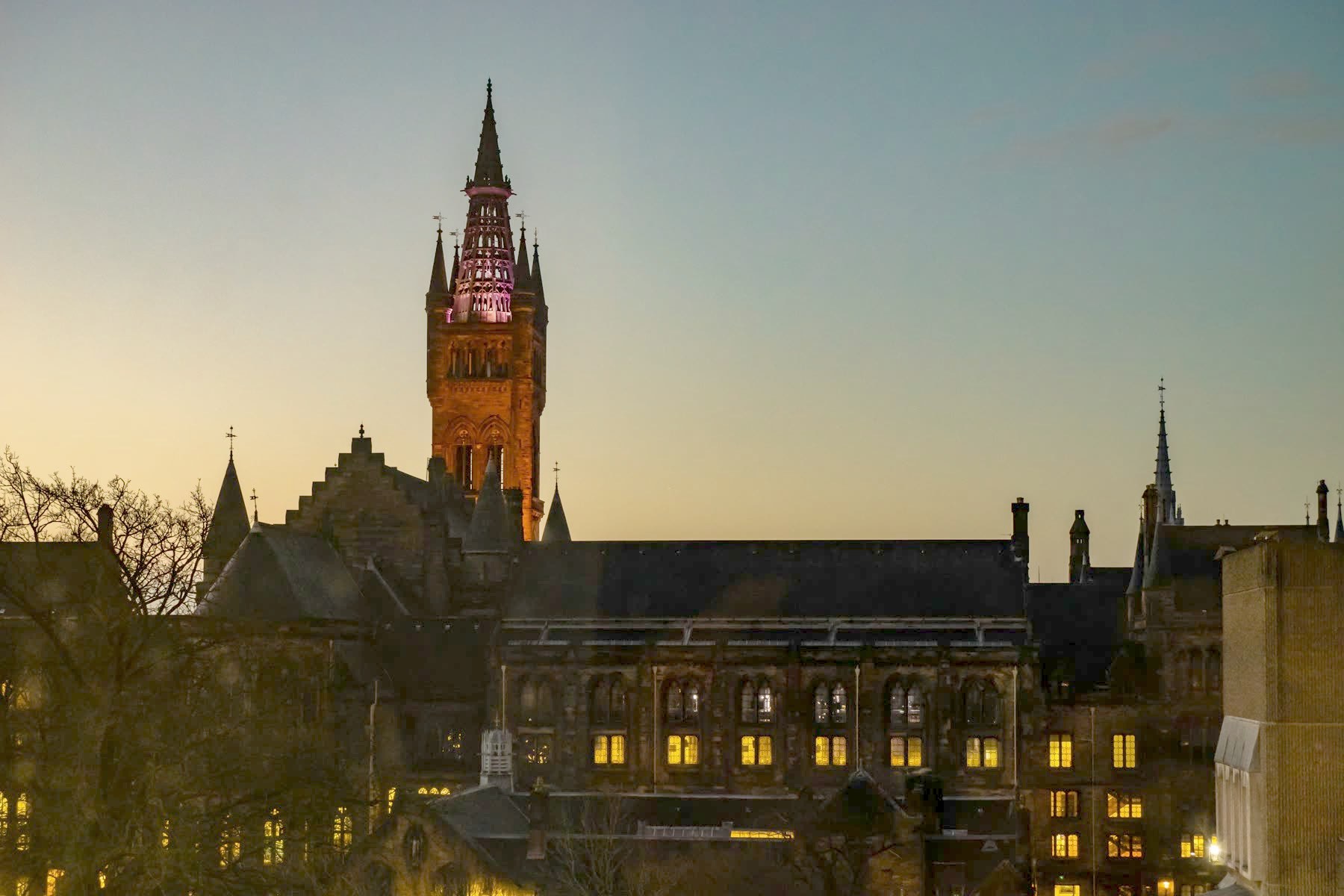
On the cover: the University of Glasgow, which offers 688 undergraduate courses — the second most in our catalogue. Photo: Johnny Briggs / Unsplash.
The Bottom Line
Every undergraduate application to a UK university goes through one organisation, UCAS, on one form, with one personal statement. You get five choices, and all five see the same application.
There are 25,399 undergraduate courses at the 148 institutions we cover. Reducing that to five is the work. Everything else — the form, the deadlines, the offers — is process you can learn in an afternoon.
What you absolutely need to know:
- One application, five choices, one personal statement
- The five choices are the whole decision, and there are 25,399 courses to choose from
- There are two deadlines, and which one applies depends on your courses
- Equal consideration means January is not late — until it is
- Your five choices are not interchangeable, even when they look identical
- If all five say no, Extra lets you try again, one at a time
- If you still have no place in July, Clearing is the main route
| Date | What it is |
|---|---|
| 15 October 2026 | Oxford, Cambridge, medicine, dentistry, veterinary |
| 13 January 2027 | Equal consideration for most undergraduate courses |
| 25 February 2027 | Extra opens |
| 2 July 2027 | Clearing opens |
All 18:00 UK time where a time applies. Source: UCAS.
1. One application, five choices, one personal statement
You register once with UCAS, complete one form, and choose up to five courses. Each university sees your application, but none of them sees where else you have applied. They each decide independently.
You write one personal statement and all five choices read it. This is the single most important structural fact about UCAS, and it is the reason the five have to hang together: a statement that argues convincingly for economics cannot also argue convincingly for veterinary medicine.
You need a reference before the application can be sent. If you are applying through a school or college, that reference is written by them and their internal deadline will be earlier than the UCAS one.
2. The five choices are the whole decision
There are 25,399 undergraduate courses at the 148 institutions in our catalogue. The median institution offers 155 of them; the largest offers 1,008.
Narrowing by subject helps less than people expect. The median subject area holds 1,017 courses, spread across 113 institutions. So a student who has firmly decided what to study is still choosing five from roughly a thousand.
| Courses | |
|---|---|
| All undergraduate courses in our catalogue | 25,399 |
| A typical single subject area | 1,017 |
| At one typical institution | 155 |
| Your application | 5 |
25,399 courses at 148 institutions. Source: Telariq data.
This is why the search happens months before the form does. UCAS's search tool opened for 2027 entry courses on 28 April 2026, almost eleven months before the January deadline.
3. There are two deadlines, and which one applies depends on your courses
15 October 2026, 18:00 UK time is the equal consideration date for the universities of Oxford and Cambridge, and for most courses in medicine, dentistry and veterinary medicine or science.
13 January 2027, 18:00 UK time is the equal consideration date for most other undergraduate courses.
Your deadline comes from your courses, not from your school year — and a list of five can straddle both. If one choice is an October course, that choice must be in by October, even though the other four are not due until January.
| Date | What happens |
|---|---|
| 28 April 2026 | UCAS search tool shows 2027 entry courses |
| 12 May 2026 | Applications open — you can register and start |
| 1 September 2026 | Completed applications can be submitted |
| 15 October 2026 | Deadline: Oxford, Cambridge, medicine, dentistry, veterinary |
| 13 January 2027 | Deadline: most other undergraduate courses |
| 25 February 2027 | Extra opens |
| 30 June 2027 | Last day to be sent to universities; after this, Clearing |
| 1 July 2027 | Last day to add an Extra choice |
| 2 July 2027 | Clearing opens |
| 22 July 2027 | Last day for reply swaps |
| 23 September 2027 | Final date for 2027 entry applications |
| 18 October 2027 | Last date to add a Clearing choice |
All times 18:00 UK time where a time applies. Source: UCAS, dates and deadlines.
These dates move every cycle, and stale copies are everywhere. The 2026 equal consideration date was 14 January; for 2027 it is the 13th. Extra opened on 26 February last cycle and opens on the 25th this one. We found both old dates still published on third-party sites, and one on a university's own key dates page, while checking this guide. Take the date from UCAS.
4. Equal consideration means January is not late — until it is
Every application that reaches UCAS by the deadline must be considered equally. A university cannot prefer an October applicant over a January one. There is no advantage in submitting on the first possible day.
After the deadline the guarantee disappears. Universities do not have to look at a late application, though they may if places remain once the on-time ones are dealt with. UCAS's own advice is to ask the university first — and it notes that for the 15 October courses it is unusual for late applications to be considered at all, because those courses are heavily subscribed.
One exception matters for families outside the UK. Many universities continue to accept international applications later in the year, closer to the start of the course. That is a real difference, but it is a university's discretion rather than a rule, and it does not apply to the October courses.
5. Your five choices are not interchangeable, even when they look identical
Five offers for the same subject can differ in ways the offer letter does not mention.
Length. More courses run four years than three — 12,103 against 11,148 in our catalogue — and at Scottish institutions almost all of them do. A foundation, placement or year-abroad year is part of the course for 9,086 courses, not an option added later.
Cost. Across fourteen institutions publishing a 2027/28 fee for a computing course, the tuition for the whole course ranges from £55,800 to £121,200 — and two institutions charging within £400 of each other per year can end up £26,000 apart across the degree, purely because one course is a year longer.
Entry route. For some countries an institution's published route is a foundation year rather than direct entry, which adds a year of tuition and a year of living costs before the degree starts.
None of this appears on the UCAS form. All of it is decided when you pick the five.
6. If all five say no, Extra lets you try again
Extra opens on 25 February 2027. If you have used all five choices and are not holding any offers — whether because you were unsuccessful or because you declined them — you can add one more choice at a time.
You apply to one course, wait for a decision, and if it is unsuccessful or you decline it, you can try another. The last day to add an Extra choice is 1 July 2027.
7. If you still have no place in July, Clearing is the main route
Clearing opens on 2 July 2027, and universities publish courses that still have vacancies in UCAS's search tool.
You enter Clearing if you applied after 30 June, if you hold no offers, if your offers were not confirmed on results day, or if you release yourself into it. The last date to add a Clearing choice is 18 October 2027, and the final date for any 2027 entry application is 23 September 2027.
Clearing is not a consolation round. It is how a substantial number of students find their place every year, and international applicants use it too — but vacancies move quickly, so the useful preparation is knowing in advance which courses you would take.
Our advice
Do the narrowing before you touch the form. The application takes days; choosing five courses from 25,399 takes months, and it is the part that decides the outcome.
Check which deadline each of your five carries before you build a timetable around January. One October course changes the whole schedule.
Read the length, the entry route and the fee for each of the five, not just the subject and the institution. Two offers that read the same can differ by a year and by tens of thousands of pounds.
If you are applying through a school, find out their internal deadline, which will be earlier than the UCAS one, and when your reference will be ready.
Check every date against UCAS before you plan around it — they move each cycle.
The not so fine print: what was excluded in this report
- Conservatoire applications, which have their own deadlines and an additional choice
- Postgraduate applications, which mostly do not go through UCAS at all
- The UCAS application fee, which we have not been able to confirm from UCAS's own pages
- Student visa timings, which run on Home Office rules and their own clock
- Medicine, dentistry and veterinary sciences course data, which is outside Telariq's coverage — though their October deadline is covered above
Have a question? We'd love to hear from you — admin@telariq.com