
What a UK degree actually costs
£118,308 in costs but the fee page says £21,795.
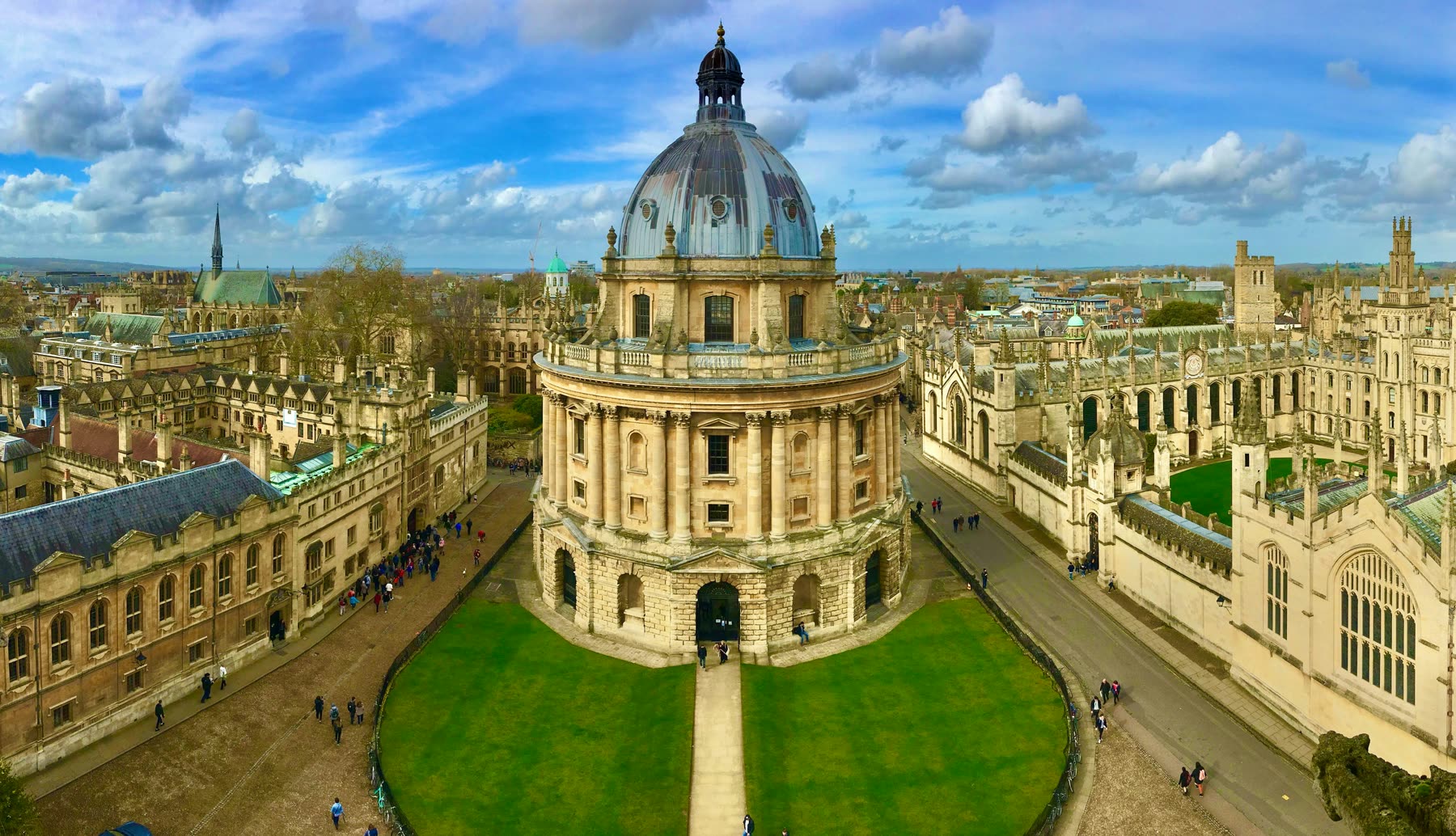
On the cover: the Radcliffe Camera, University of Oxford. Oxford publishes tuition and college fee as a single figure, and says fees rise each year by up to the higher of 6% or CPI. Photo: Ben Seymour / Unsplash.
The median UK undergraduate degree costs £118,308. The median published course fee is £21,795 a year. So where does the rest of the cost come from?
The differences in cost are all published. They are simply published somewhere else, by someone else, or for a different year. We have read the fee pages of 148 institutions holding more than 25,000 courses, and set each figure beside the published length of the course it belongs to. This is how you can tell what a UK degree actually costs.
What you absolutely need to know:
- Not all courses in a university cost the same
- The same course might be a different duration across universities
- Student visa applicants need to show proof of funds for tuition and living expenses
- Some universities have college fees in addition to course fees
- The fees you see might be out of date
- Fees might change from the second year of your course
1. Costs vary by subject. Sometimes by more than £50,000.
Institutions publish their fees in multiple ways. Some publish a single fee across all courses. Some publish a fee range for a set of courses aligned to a subject. Others publish a fee per course. Do not assume the fee you see is independent of the course you select in a particular university.
To illustrate this point, we sampled multiple subjects, each of which had a minimum of 150 courses across the universities we cover at Telariq. The result? Design courses have a median of £60,000, Sciences about £112,000. When we explored this further, we see that of the universities we cover:
- 77 universities (52%) publish a fee per course
- 33 universities (22%) publish a flat fee for all the courses they offer
- 23 universities (16%) publish a fee range for their courses
- 15 universities (10%) had no fee published at the time we read their site
| Subject area | Courses | Median length | Median annual fee | Median whole course |
|---|---|---|---|---|
| Architecture, building and planning | 203 | 3 years | £18,570 | £70,400 |
| Biological and sport sciences | 702 | 4 years | £23,700 | £84,300 |
| Business and management | 1,331 | 3 years | £20,000 | £75,000 |
| Computing | 618 | 3 years | £19,200 | £71,800 |
| Design, and creative and performing arts | 596 | 3 years | £18,250 | £59,800 |
| Engineering and technology | 1,125 | 4 years | £28,500 | £101,100 |
| Geography, earth and environmental studies | 363 | 3 years | £27,720 | £92,100 |
| Historical, philosophical and religious studies | 396 | 3 years | £23,000 | £76,500 |
| Language and area studies | 1,189 | 4 years | £26,300 | £99,900 |
| Law | 244 | 3 years | £19,450 | £70,400 |
| Mathematical sciences | 309 | 4 years | £26,840 | £91,200 |
| Media, journalism and communications | 252 | 3 years | £19,300 | £64,500 |
| Physical sciences | 583 | 4 years | £31,100 | £112,400 |
| Psychology | 298 | 3 years | £19,450 | £70,400 |
| Social sciences | 1,287 | 3 years | £20,800 | £73,800 |
| Subjects allied to medicine | 625 | 3 years | £19,950 | £70,736 |
Source: Telariq data.
2. Course duration is important. Do not assume it is three years.
More courses run four years than three. 12,103 against 11,148, with 1,587 at five years. At Scottish institutions it is not even close: 3,575 of 3,684 courses run four years or longer. In England it is 9,226 of 19,533.
A foundation, placement or year-abroad year is often part of the course rather than an option added later. That is true of 9,086 courses, more than a third of the courses we cover. The course is four years from the day it starts.
| Length | Courses |
|---|---|
| Under 3 years | 539 |
| 3 years | 11,148 |
| 4 years | 12,103 |
| 5 years | 1,587 |
| 6 or more | 22 |
25,399 courses at 148 institutions.
Source: Telariq data.
The silver lining — the extra year is rarely charged at the full rate. Cambridge charges international students half the annual fee during a year abroad. The University of Sheffield charges placement students a fifth of the full-time rate for 2027/28 entrants. A family that multiplies by four overstates both. Check with your institution on the exact fees — we have links to almost every course available.
A four-year course is often a different course with its own fee. King's College London publishes £35,900 for a three-year computing course and £42,900 for a four-year one. At UCL the pair is £33,300 and £48,600. The longer course is generally an integrated master's, which is a different qualification priced separately, not the same degree charged for longer. Choose wisely, you might be using one of your 5 UCAS choices on a course that is longer and more expensive than you originally thought.
| Institution | Annual fee | Length | Whole course |
|---|---|---|---|
| Heriot-Watt University | £26,840 | 4 years | £107,360 |
| King's College London | £35,900 | 3 years | £107,700 |
| Lancaster University | £31,700 | 3 years | £95,100 |
| Loughborough University | £31,500 | 3 years | £94,500 |
| Royal Holloway, University of London | £23,000 | 3 years | £69,000 |
| The University of Salford | £18,600 | 3 years | £55,800 |
| UCL | £33,300 | 3 years | £99,900 |
| University of East Anglia | £24,250 | 3 years | £72,750 |
| University of Exeter | £31,500 | 3 years | £94,500 |
| University of Hull | £21,520 | 3 years | £64,560 |
| University of Newcastle upon Tyne | £27,300 | 3 years | £81,900 |
| University of Stirling | £20,000 | 4 years | £80,000 |
| University of Strathclyde | £30,300 | 4 years | £121,200 |
| University of Surrey | £28,100 | 4 years | £112,400 |
Note: the four institutions showing four years publish no three-year computing course. Source: Telariq data.
This is where it gets interesting. Heriot-Watt (£26,840) and King's (£35,900) annual fees are £9,000 apart. However, when you factor in the duration they land within £400 of each other across the full duration of the degree. On the other end of the spectrum Strathclyde (£30,300) and Lancaster (£31,700) are within £1,400 annually but this difference eventually becomes £26,000 apart across the duration of the degree. The annual figure cannot tell a family that, but the course duration can.
3. Living costs — the figure the UK Home Office requires
This is the second largest component, and it is a rule rather than an estimate. From 30 November 2026 a Student visa applicant must show £1,570 a month to cover living expenses for a course in London. Outside London it is £1,203 a month. Both run for up to nine months, so £14,130 or £10,827 a year, on top of the course tuition.
It is a floor, not a budget. The Home Office figure is what must be proved before a visa is granted. Most families spend more, and what they spend depends on the city rather than the course. Of the courses in this analysis, 1,350 are at institutions in London. Over a three-year London course that requirement is £42,390, and over four years £56,520. For a three-year course outside London it is £32,481, and over four years £43,308.
About half the UK degrees we cover actually cost an international family between £92,331 and £148,508, and about two thirds of that is tuition. In addition to the published fees per course, there are living costs a Student visa applicant must show. Getting a visa requires you to show you can pay for the course AND your ability to live in the UK while studying for the course.
| Tuition, whole course | With living costs | |
|---|---|---|
| Lower quarter | £58,515 | £92,331 |
| Middle | £79,650 | £118,308 |
| Upper quarter | £103,800 | £148,508 |
Source: Telariq data. UK Home Office requirement of £14,130 of living costs per year in London and £10,827 outside London.
4. Sometimes there's a college fee in addition to a tuition fee
Cambridge publishes tuition and a College fee separately. Every international student pays both. Each College sets its own, and for 2027-28 the published figures run from £12,500 to £15,950 a year across the 31 Colleges at Cambridge. Most are fixed for the length of the course.
Oxford has the same structure but combines it. Until 2018/19 Oxford published a university fee and a college fee separately. Since 2019/20 it has published a single course fee covering both.
Two institutions, one arrangement, two presentations — when making your Oxbridge decision, don't think Cambridge is cheaper.
| Tuition, per year | £30,798 |
|---|---|
| Course length | 3 years |
| Tuition, whole course | £92,394 |
| College fee, per year | £12,500 to £15,950 |
| College fee, whole course | £37,500 to £47,850 |
| Tuition and College fee | £129,894 to £140,244 |
| Home Office requirement, three years outside London | £32,481 |
| Total | £162,375 to £172,725 |
Source: University of Cambridge, International fees and costs; Undergraduate tuition fees 2027-28. Home Office, Statement of Changes to the Immigration Rules HC 584.
The arithmetic holds because Cambridge states that international fees are fixed for the duration of the course, and that College fees are in many cases fixed too. The figure on the course page is £30,798. The family's outlay is between five and six times it.
5. The fee you're reading is probably for last year
Fees are agreed one academic year at a time, so a page shows the year the institution has settled. An institution that has confirmed 2026/27 but not 2027/28 can publish the year it has or publish nothing. Most publish the year they have. It might not be for the year you are applying for. In fact, more than 75% of currently published fees are labelled for the year before a 2027 entrant starts.
| Published year | # of courses | # of institutions |
|---|---|---|
| 2026/27 | 14,405 | 112 |
| 2027/28 | 3,006 | 20 |
| No year shown | 1,211 | 9 |
| 2025/26 or earlier | 181 | 3 |
18,803 courses at 133 institutions.
Source: Telariq data.
The twenty institutions that have published 2027/28 include UCL, King's College London, Lancaster, Loughborough, Newcastle, Royal Holloway, Strathclyde, Surrey and the University of East Anglia. Everywhere else, the number a family is reading today belongs to the year before their child arrives.
Pages turn over without notice. When we read Cambridge's international fees page, we recorded £29,052 for its Group 1 courses, labelled 2026 entry. Within days the same page carried 2027 entry at £30,798. Cambridge states 2028 entry will appear no later than 1 October 2027. A figure copied into a spreadsheet six months ago may be a year out of date and look identical. Telariq will continue to monitor the fees for each course we cover and update our database with the information available after each update.
6. Fees aren't always fixed for the duration of your course
Institutions take different positions on whether the fee is fixed, and each says so in writing. Cambridge fixes international fees for the duration of the course. Sheffield Hallam states its international fees do not rise across a course of two years or more. Oxford states fees usually rise each year, capped at the higher of 6% or CPI. On a four-year course that difference is worth more than £10,000, and it is answered on the fee page rather than in the fee. You need to look out for these — they're not hidden, but also not apparent.
A levy is applied to institutions in England from 1 August 2028. The Department for Education has published draft legislation setting a levy of £925 per international student per year, collected by the Office for Students, with no charge on a provider's first 220 international students. It applies in England, where 19,533 of the courses in our catalogue sit. The other 5,866 are in Scotland, Wales and Northern Ireland where this levy is not being applied.
It is charged to the institution, not to the student. Oxford has already stated that international students will not pay the levy directly and will face no separate charge on top of published course rates. Other institutions have made no statement either way. A family starting in September 2027 will be part-way through when the question is settled. Ask your college where they stand if this is important to your decision.
Our advice
Like most counselors, we will tell you to trust Telariq. Unfortunately, it is more nuanced. As much as we would like to be your only source of truth, you need to validate what you hear from us with the universities you have shortlisted. We have analysed over 25,000 courses in about 150 universities and we've seen how differently costs and fees are presented. You should check Telariq to see what we know, but confirmation from the university (and an electronic trail of that confirmation) is your optimal solution.
Confirm course fees with the college before submitting your application.
The not so fine print: what was excluded in this report
- Living costs beyond the Home Office requirement
- Scholarships and bursaries, which may reduce what you pay
- Deposits, materials, field trips and professional memberships, which some institutions publish on the course page under additional costs
- Medicine, dentistry and veterinary sciences, which are outside Telariq's coverage
Have a question? We'd love to hear from you — admin@telariq.com