
What happens after you get an offer
Two replies, one results day, and the deadlines that arrive before either.
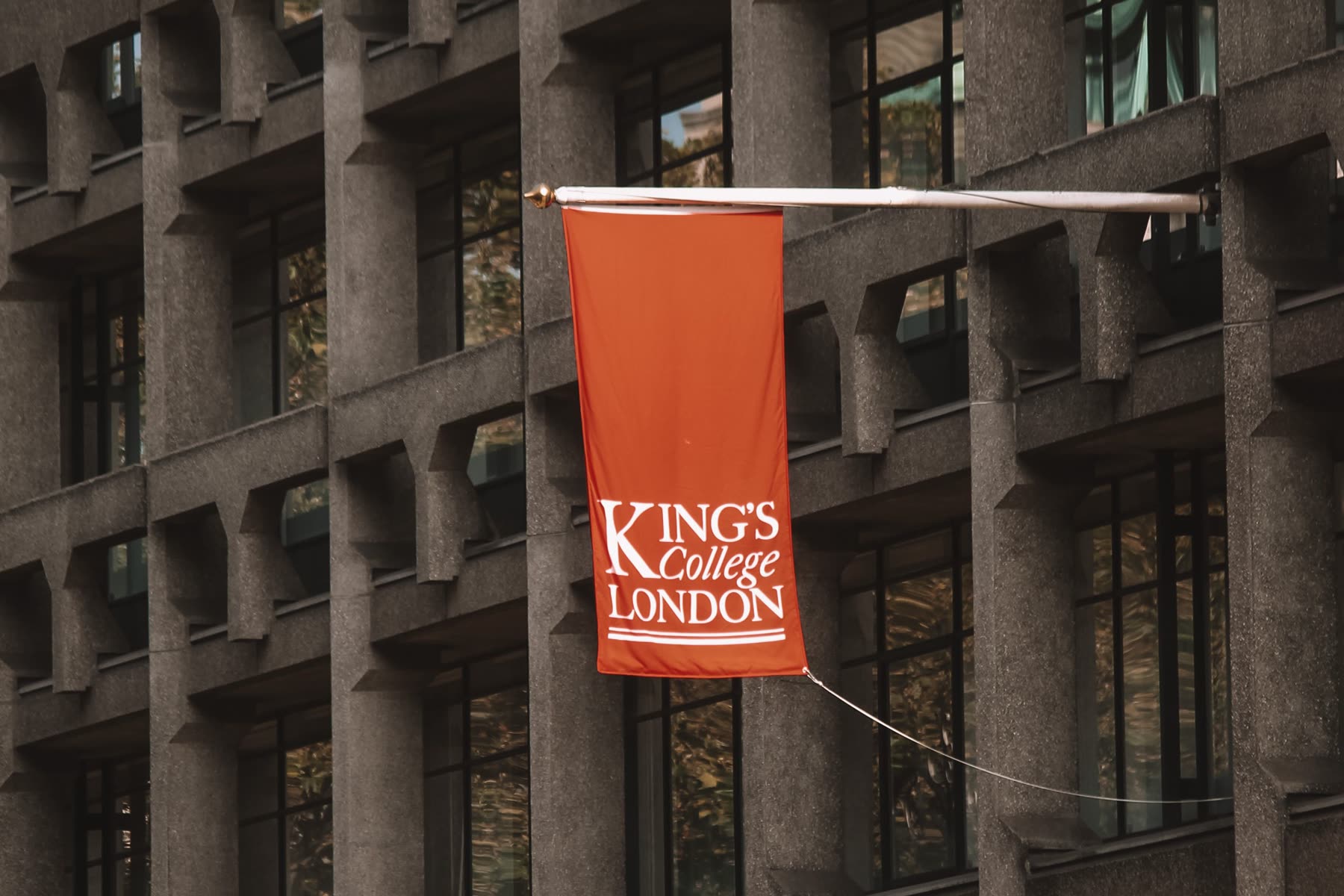
On the cover: King's College London, on the Strand. Its deadline to keep the first-year accommodation guarantee for 2026 entry was 3 June, the earliest of the 16 universities we read. Photo: Sofia Marquet / Pexels.
The Bottom Line
An offer is not a place. Between the first offer and the first day of the course there are three more steps: you reply, you meet the conditions, and the university does its own paperwork with you. For an international student that paperwork includes a deposit at some universities, an accommodation application and the document needed for a visa.
UCAS sets the reply rules and the dates. Each university sets the rest, and they do not set them the same way. We read the pages of 16 universities to see how far apart they are. Three say plainly that undergraduates pay no deposit, and one asks some students for the full first-year fee. Twelve of the 14 that publish an accommodation deadline set it before A-level results day.
What you absolutely need to know:
- Read what each offer actually asks for, not only the grades
- You reply once: one firm choice, one insurance choice, and decline the rest
- Your reply deadline depends on when your last decision arrives
- Your firm choice starts the university's own process: deposit, accommodation, visa document
- Accommodation deadlines often fall before your results do
- On results day your application status tells you where you stand
- Once the place is unconditional, the visa process can begin
| Date | What happens |
|---|---|
| 5 May 2027 | Reply deadline if your last decision arrived by 31 March |
| 2 June 2027 | Reply deadline if your last decision arrived by 12 May |
| 2 July 2027 | Clearing opens; holders of an unconditional firm place can release themselves |
| 21 July 2027 | Reply deadline if your last decision arrived by 14 July |
| 22 July 2027 | Last day for reply swaps |
| 12 August 2027 | A-level results day |
Source: UCAS, replying to your offers, read 7 October 2026; AQA, results days, read 7 October 2026.
1. Read what each offer actually asks for
A conditional offer means you still have something to meet, usually exam results. The conditions are written in the offer: grades, scores, particular subjects, or an English language result.
An unconditional offer means you have already met the academic requirements. It is not always the end of the conditions. UCAS notes that you may still need to provide proof of your results or meet financial or medical requirements.
Some offers change when you accept them. UCAS describes conditional offers that become unconditional once you make that university your firm choice. Read the offer for this before you reply. It changes which of your offers is the safe one.
2. You reply once: one firm choice, one insurance choice, and decline the rest
When the last of your universities has decided, UCAS emails you and you reply to all your offers together.
Your firm choice is your first choice. If it is unconditional, the place is yours. If it is conditional, it is yours when you meet the conditions.
Your insurance choice is the back-up for a conditional firm choice. It only comes into play if you miss your firm offer's conditions and meet the insurance offer's. UCAS's own guidance is to choose an insurance with lower conditions than your firm, and somewhere you would still be happy to go.
Every other offer must be declined. You can hold only one firm and one insurance choice. If your firm choice is unconditional, you cannot hold an insurance choice at all.
You can change your mind, within limits. For 14 days after replying, you can ask UCAS to change your reply. After that you need the university's permission. No reply swaps are possible after 22 July 2027.
3. Your reply deadline depends on when your last decision arrives
There is no single reply date. UCAS sets three, and yours depends on when your final decision came in. Your personal deadline appears in your application.
| If your last decision arrives by | You must reply by |
|---|---|
| 31 March 2027 | 5 May 2027 |
| 12 May 2027 | 2 June 2027 |
| 14 July 2027 | 21 July 2027 |
Source: UCAS, replying to your offers, read 7 October 2026.
A late decision from one university moves your reply date for all of them. If four universities decide in February and one decides in May, your reply is due on 2 June, not 5 May. That gives you longer to decide. It also means the university-side deadlines in sections 4 and 5 can come very close to your reply date.
4. Your firm choice starts the university's own process
Once a university is your firm choice, it begins its own steps with you. UCAS does not set these, and they differ from university to university. For an international student the main ones are a deposit, an accommodation application, and the checks that lead to a Confirmation of Acceptance for Studies (CAS), the reference number needed to apply for a Student visa.
Whether you pay a deposit depends on the university. We read the deposit and CAS pages of 16 universities in October 2026. Three say plainly that undergraduates pay no deposit. Several publish a deposit only for postgraduate courses. One sets the amount by country, up to the full first-year fee.
| What the university's own pages say | Universities |
|---|---|
| No deposit for undergraduates | Exeter, Imperial College London, Leeds |
| A published amount for undergraduates | Coventry: £4,000, £8,000, or the full first-year fee, depending on country |
| A deposit, with the amount set in the offer | King's College London |
| A deposit "if required" or "where applicable" | Bristol, Lancaster, Surrey |
| A £3,000 deposit on the offer-acceptance page, without saying which level it applies to | Aston |
| No undergraduate deposit rule found; the deposit page covers postgraduate courses | Birmingham, Cardiff, Durham, Edinburgh, Loughborough, Manchester, Sheffield |
Note: universities listed A to Z within each row. Most pages describe 2026 entry; no 2027 versions were published when read. A deposit page that covers only postgraduates is not proof that undergraduates pay nothing. The offer letter is the final word.
Source: Telariq read of each university's own fees, deposit and CAS pages, read 7 October 2026.
Refund terms differ too. Where a refund policy is published, a deposit is usually returned if the visa is refused through no fault of the student. Bristol excludes refusals caused by a fraudulent application, the student's own error, or a credibility interview, and keeps a £200 administration fee. Aston's acceptance page says its deposit is non-refundable except where the student does not meet the academic conditions or does not obtain a visa.
The CAS comes later than many families expect. Every university we read that states its conditions issues the CAS only after the offer is unconditional and accepted. Several say they will not issue one earlier than six months before the course starts. Manchester says to expect it three to four months before; Loughborough usually begins in June.
5. Accommodation deadlines often fall before your results do
Fifteen of the 16 universities we read guarantee a room to first-year undergraduates who meet their conditions. The guarantee usually depends on applying for accommodation by a set date — and that date is often before you know whether your conditional offer will be confirmed.
| University | Apply for accommodation by (2026 entry) |
|---|---|
| University of Birmingham | 31 July |
| University of Bristol | 30 June |
| Cardiff University | 24 July |
| Durham University | 28 July |
| University of Edinburgh | 16 August |
| University of Exeter | 31 July |
| Imperial College London | 17 July |
| King's College London | 3 June |
| Lancaster University | 5 August |
| University of Leeds | 1 July |
| Loughborough University | 22 July |
| University of Manchester | 31 August |
| University of Sheffield | 26 July |
| University of Surrey | 25 July |
Deadline to keep the first-year accommodation guarantee, 2026 entry, for an applicant holding the university as firm choice. A-level results day was 13 August 2026.
Note: Leeds and Sheffield publish later dates for applicants who are not firm choice holders; Loughborough's date is for registering, with the full application due by 27 August; Edinburgh also requires the offer to be unconditional firm by 30 August. Aston ties its guarantee to firmly accepting an unconditional offer by 11 September. Coventry guarantees a room only to students who join through Clearing. The 2027 dates were not published when read.
Source: Telariq read of each university's own accommodation pages, read 7 October 2026.
The spread is almost three months. King's College London's deadline was 3 June 2026 — more than ten weeks before results day. Manchester's was 31 August. Twelve of the 14 dated deadlines fell before results day.
So the accommodation application cannot wait for confirmation. At most of these universities a student holding a conditional firm offer applies for a room while still waiting for results. The guarantee usually also depends on meeting the offer in the end, and some also require you to be coming alone, without a partner or family.
6. On results day your application status tells you where you stand
A-level results day is 12 August 2027. IB results reach UCAS in early July. Scottish results come out earlier in August.
If your qualification is not one UCAS receives automatically, you send the result yourself. UCAS is explicit that students with international qualifications must send proof of their results to their firm and insurance universities as soon as they have it. Universities have until 2 September to receive results unless they set their own date. Cardiff, for example, confirms places where the conditions are met by 31 August.
| Status | What it means |
|---|---|
| Waiting for confirmation | Your university has not yet said whether you met the conditions |
| Firm choice confirmed | You have a place at your firm choice |
| Insurance choice confirmed | You missed your firm offer's conditions and have a place at your insurance |
| Changed course offer | Your firm choice offers a different course; reply within five days or lose it |
| Eligible for Clearing | You did not meet the conditions of your offers |
Source: UCAS, what your application status means, read 7 October 2026.
A changed course offer has a five-day clock. If your firm choice offers you a changed course, you have five days to accept or decline it.
Releasing yourself into Clearing is permanent. From 2 July, a student holding an unconditional firm place can use the "Decline my place" button. UCAS warns that it cancels your contract with the university, removes your insurance choice, and cancels any accommodation or scholarship arrangements. A student whose firm place is still conditional cannot use the button and must contact UCAS instead.
7. Once the place is unconditional, the visa process can begin
The CAS is the bridge between this guide and the next. With an unconditional firm place, any deposit paid and the university's own checks complete, the university issues the CAS. Only then can the Student visa application start.
What the visa needs — the money you must show, the fees, the health surcharge and the timing — is the subject of our next guide.
Our advice
Read every offer for its non-academic conditions before you reply. An English language score or a document can be as much a condition as a grade.
Choose your insurance as if you might go there. UCAS says it should have lower conditions than your firm; if it does not, it may not protect you.
Find your firm choice's accommodation deadline the day you reply, not the day you get your results. At most of the universities we read, the deadline came first.
Look up the deposit and the refund terms before you reply, in the offer letter rather than on a general page. At one university we read, the deposit is the full first-year fee for some countries.
If your qualification is international, be ready to send your result to both your firm and insurance universities on the day you receive it.
Check every date against UCAS and your university before you plan around it — they move each cycle.
The not so fine print: what was excluded in this report
- Deposit and accommodation rules at universities other than the 16 we read; the 16 are universities we feature elsewhere, not a representative sample
- 2027 entry deposit and accommodation pages, which most universities had not yet published when we read them
- Conservatoire offers, which have their own reply rules
- Postgraduate offers, which mostly do not go through UCAS
- Scholarship conditions attached to an offer, which are covered in our scholarship guides
- Student visa rules, which are the subject of our next guide
Have a question? We'd love to hear from you — admin@telariq.com