
Will a UK university accept your qualification?
Because not everyone does A-levels
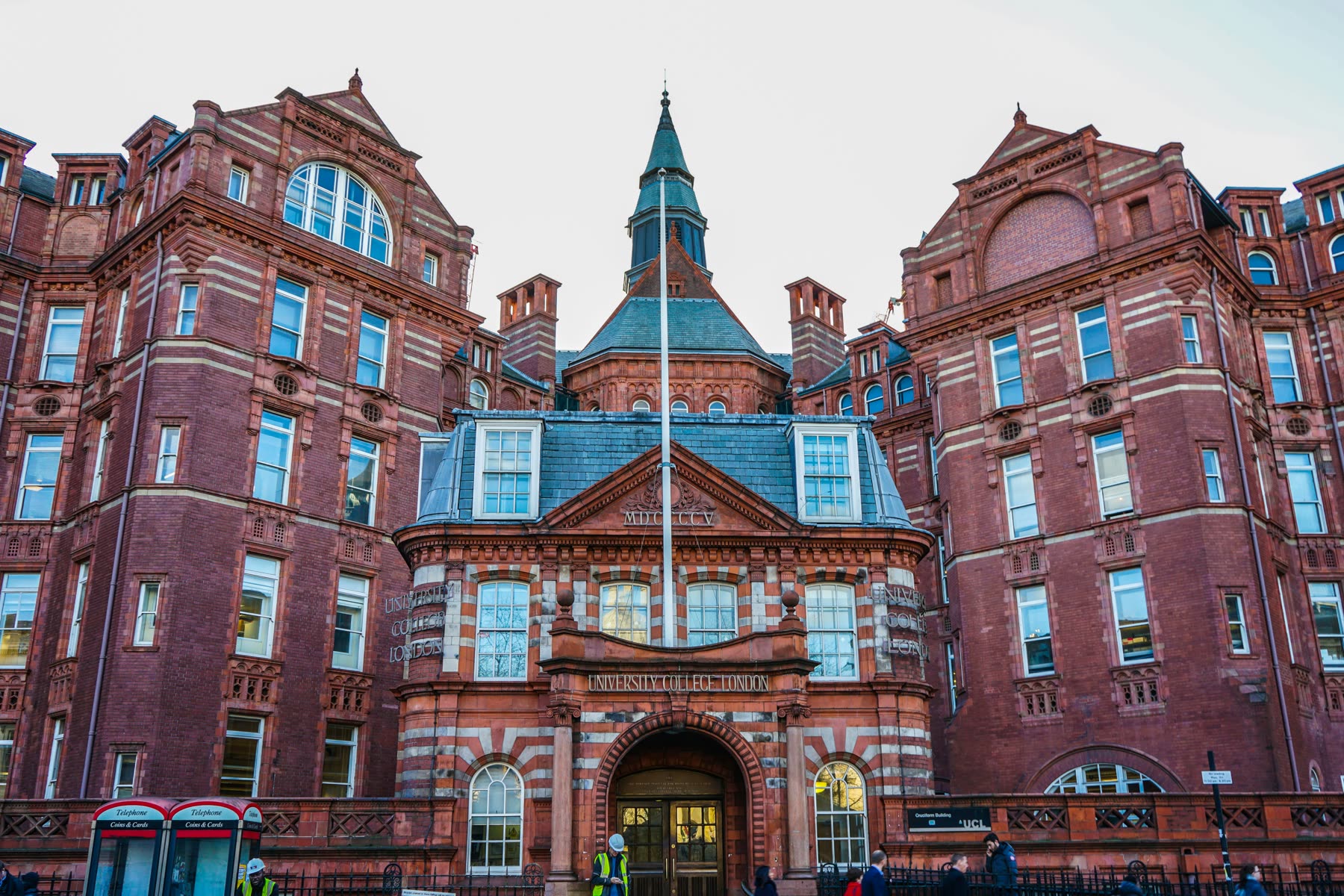
On the cover: UCL, which publishes more grade-by-grade ladders for overseas qualifications than any other university — 132. Photo: Luke Wang / Unsplash.
The Bottom Line
Your child's school-leaving certificate is not always an A-level, and every UK institution has already decided what it will accept instead. Most of them have published that decision. Almost none of them have published it in the same place, in the same words, or at the same level of detail.
We read the published entry requirements of 145 UK institutions and recorded 11,845 country-by-country requirements. This is what they say, and what they leave out.
What you absolutely need to know:
- Most institutions publish how they treat a qualification from your country
- How much they publish depends almost entirely on where you are from
- They do not agree on what your qualification is called
- The most useful thing an institution can publish is a grade-by-grade ladder
- The International Baccalaureate is treated as its own route by most institutions
- Sometimes the published route is a foundation year, not direct entry
1. Most institutions publish how they treat a qualification from your country
Of the 145 institutions we read, 91 publish a page for each country, naming the qualification and the grades they expect. 37 publish a single combined page covering many countries at once, which is quicker to read and usually less specific about yours.
16 publish nothing at all about how they treat overseas qualifications, and one institution's site could not be reached. Eighteen have no country-level requirement on their site in any form.
| What the institution publishes | Institutions |
|---|---|
| A page for each country | 91 |
| One combined page covering many countries | 37 |
| Nothing about overseas qualifications | 16 |
| Site could not be reached | 1 |
145 institutions. Source: Telariq data.
That is not a criticism of those institutions — a published requirement is a commitment, and some prefer to assess each application individually. But it does mean that for roughly one institution in nine, you cannot find out where you stand without asking, and asking is the only route available to you.
2. How much they publish depends almost entirely on where you are from
This is the finding that should change how you plan.
If your child's qualification comes from a major sending market, most institutions have written something down. India is covered by 125 of the 145 institutions we read, Malaysia by 122, Hong Kong by 120, China by 119, Thailand by 114, Pakistan by 112. Bangladesh, Nigeria, Vietnam, Singapore, the United Arab Emirates, Ghana, Indonesia, Sri Lanka, Kenya, Saudi Arabia and Nepal all sit above 100. Roughly seven institutions in ten have published a position on your qualification.
If it does not, you are largely on your own. Away from those markets the picture inverts: more than two in five of the places these institutions publish for are covered by five institutions or fewer. The same system that has written six different documents about Malaysian qualifications has, for much of the world, almost nothing.
| Country | Institutions, of 145 |
|---|---|
| India | 125 |
| Malaysia | 122 |
| Hong Kong | 120 |
| China | 119 |
| Thailand | 114 |
| Pakistan | 112 |
| Bangladesh | 111 |
| Nigeria | 111 |
| Vietnam | 111 |
| Singapore | 110 |
| United Arab Emirates | 109 |
| Indonesia | 108 |
| Sri Lanka | 107 |
| Kenya | 105 |
| Saudi Arabia | 105 |
| Nepal | 101 |
Counts merge the different labels institutions use for the same country. Source: Telariq data.
A family from a well-covered country can compare institutions before applying. A family from a thinly covered one has to write to admissions offices one at a time — and should start earlier for that reason alone.
3. They do not agree on what your qualification is called
Across the requirements we read, institutions use 3,308 distinct names for qualifications. Many of those are the same certificate under different labels.
India is the clearest example. For the same Class XII year, UK institutions variously publish Standard XII, Standard 12, Class XII (CBSE/CISCE/state boards), Higher Secondary School Certificate, Indian School Certificate, and Intermediate Certificate. Seven of the India requirements name no qualification at all — they state what they expect without saying what it applies to.
Counted properly, the scale of it is the point. Across the 125 institutions that publish an Indian requirement, we recorded 140 different names for the qualifications involved. China is starker still: 119 institutions, and 172 different names between them — more names than institutions.
| Country | Different names published | Institutions |
|---|---|---|
| China | 172 | 119 |
| Malaysia | 166 | 122 |
| India | 140 | 125 |
| Singapore | 118 | 110 |
| Pakistan | 110 | 112 |
| Thailand | 102 | 114 |
| Vietnam | 94 | 111 |
| Bangladesh | 89 | 111 |
| Hong Kong | 67 | 120 |
| Nigeria | 31 | 111 |
Names counted after merging the different labels institutions use for the same country. Source: Telariq data.
This matters practically. A family searching an institution's site for the exact words on their certificate may find nothing and conclude they are not eligible, when the institution has simply called it something else. Matching those names to each other is work somebody has to do, and we have done it.
4. The most useful thing an institution can publish is a grade-by-grade ladder
748 of the requirements we hold are ladders, published by 55 of the 145 institutions — the institution sets out its UK offer alongside the equivalent grade in your system, step by step, rather than giving one threshold. The other 90 do not publish one at all.
A ladder answers the question a family actually has, which is not whether you are eligible but where your grades put you. 24 of the 125 institutions publishing an Indian requirement give one. Most are not — they give a single line, and a single line tells you whether you clear the bar, not how far above it you sit.
Read the bottom of a ladder carefully. Glasgow's runs from 85% down to 75%, and then stops moving: AAB, ABB and BBB all map to the same 75%. Above that floor an extra percent changes which courses are open to you. Below it, the ladder has nothing more to say, and the institution is the only source left.
5. The International Baccalaureate is treated as its own route by most institutions
57 of the 145 institutions name the International Baccalaureate explicitly in their published requirements, and they do so for 139 different countries and territories. Counting every requirement where IB appears anywhere in the published text, it turns up in 919 of them, across 69 institutions.
If your child is at an international school on the IB, this is usually good news: the IB is the one qualification the UK system reads without translation, and an institution that publishes an IB score has told you exactly where you stand regardless of which country you are applying from.
6. Sometimes the published route is a foundation year, not direct entry
59 requirements, across six institutions, state that the route from that country's school-leaving qualification is a foundation year rather than direct entry. They appear for Egypt, Japan, South Korea, Taiwan, Thailand, Jordan, Saudi Arabia, Bangladesh, Lebanon and Nepal, among others.
This is the single requirement with the largest effect on what a family pays. A foundation year is an additional year of tuition and an additional year of living costs, before the degree begins. If an institution publishes a foundation route for your country and another publishes direct entry, those two offers are not comparable, however similar the annual fee looks.
Our advice
Find your country's page on each institution's site before you shortlist, not after. Whether one exists at all is itself information about how much work the application will take.
Search for more than one name for your qualification. If Higher Secondary School Certificate returns nothing, try the board's name, the class number, and the certificate's official title.
If an institution publishes a ladder, use it — it tells you where you stand rather than only whether you qualify.
Check whether the published route is direct entry or a foundation year before you compare any fees. A foundation year changes the total by roughly a quarter.
And where an institution publishes nothing, write to the admissions office. Sixteen of the institutions we read publish nothing at all, and for those, an email is not a last resort. It is the only route.
Confirm entry requirements with the institution before submitting your application.
The not so fine print: what was excluded in this report
- Course-level entry requirements — these are the institution's general position, and an individual course may ask for more
- English language requirements, which are set separately
- Subject-specific conditions, which many institutions publish alongside the grades and which we hold but do not summarise here
- Postgraduate entry
- Medicine, dentistry and veterinary sciences, which are outside Telariq's coverage
Have a question? We'd love to hear from you — admin@telariq.com